
Value Destroyers
Ignore the signs at your own peril!
Beware of value destroyers. "See" beneath the surface.
Beware! Your most expensive asset might be at risk of losing significant value if you are unable to interpret the signs your property is giving you. But not all signs are caused by severe issues and are value destroyers. Wall cracks and water damage are two of these signs.
Are all wall cracks value destroyers?
Your home's interior and exterior wall cracks could be signs for a lot of different possibilities. Wall cracks can occasionally only be a minor aesthetic problem. Other times, though, they could be a warning of more serious structural issues brought on by shifting ground, collapsing home foundations, or even subpar design and construction, all value destroyers.
It is preferable to have a house without cracks than one that does. The majority of homes, do, however, exhibit some cracking, but not all cracks are value destroyers.
Cracking can be classified according to its severity:
Zig-zag wall cracks
Your home's foundation is probably no longer secure if you have zig-zag wall cracks that are larger than 5 mm. Zig-zag cracks typically signify that a significant portion of your property is shifting as a result of brick foundations or underground soil that are not stable.
You probably have cracked walls in other areas of your home if you have zig-zag cracks. Zig-zag wall cracks are certainly neither superficial or cosmetic. Do not delay, find their root cause because zig-zag wall cracks are value destroyers.

Exterior and interior wall cracks
Your home is undergoing significant movement if light can pass through your cracked walls or if there are cracks above your doors and windows. Failure of the foundation, soil failure, additional loads, home additions, or even brick expansion can all result in movement of your house.
Any time of the day, if you see light piercing through your wall cracks, there is unquestionably a structural issue with your house and these are most likely value destroyers.
Horizontal wall cracks
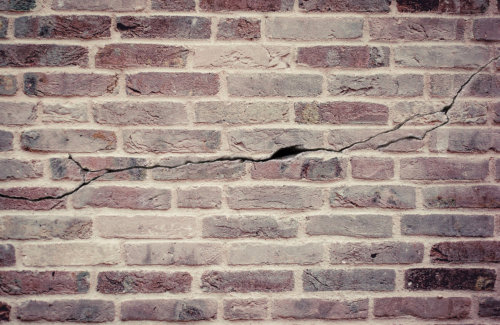
The revealing sign of localised movement in your property is horizontal cracking. Horizontal cracks are a sign of a foundational failure directly beneath the fractured wall, whereas zig-zag typically indicate mass movement.
Sometimes horizontal cracks simply stop, indicating a very localised and specific area where the wall is collapsing. While horizontal cracks are a location-specific problem, if they are not rectified the rest of the structure will continue to sink and crumble. These type of wall cracks are most likely value destroyers.
Corner wall cracks
Bricks made of clay, which is a natural product, expand over time. Some even have an annual expansion rate of up to several millimetres. Although it might not seem like much, the clay brick's expansion over decades can produce a lateral force. This force pushes the ends of the walls against one another, causing your home's corners to develop cracks.
If unaddressed, this lateral force can make your house so unstable that the walls become free-standing and could collapse at any time. Corner wall cracks are value destroyers.

Dangers of cracks
House cracks are typically not dangerous, however there are severe circumstances when they can be.
Of course, if you decide to sell your home, the presence of cracks will lower its potential sale value. But not all cracks are value destroyers.
Water damage to homes could be a value destroyer
Burst pipes, leaking fixtures, flooding, poorly installed waterproofing, broken roof tiles and clogged gutters are just a few examples of the conditions that can cause water damage, which can be exceedingly difficult and stressful to deal with.
Most people will eventually face water damage in their homes. By being aware of the warning signs and taking preventative action, problems can be resolved swiftly and the damage reduced.
There are various forms of water damage, which can result in problems ranging from minor plasterboard rot to serious structural damage. Water damage can be caused by a variety of factors, two of which are faulty plumbing and leaking roofs. Water damage can also result from seepage via foundation cracks, window leaks, or external home leaks.
One of the following types of water damage to a home could occur:
Water damage to carpet
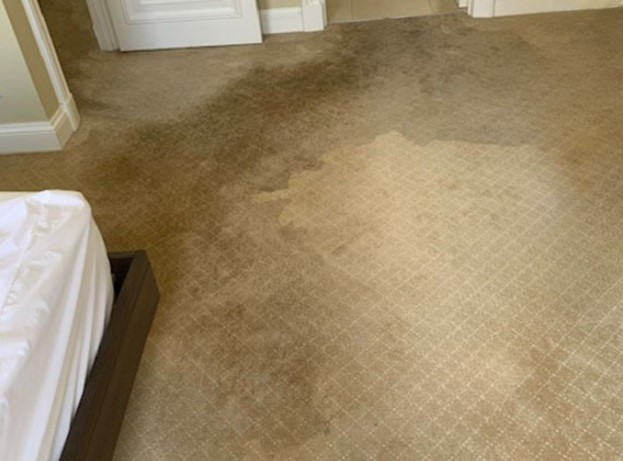
Flooding, unrepaired leaking pipes, unrepaired leaks in doors, windows, or roofing can all cause water damage to carpet. If a damp carpet is not dried out, it could develop mould, mildew, and a musty smell.
Since mould can grow and spread in as little as 2-3 days, carpet that has been wet for more than 72 hours may need to be removed.
Professionals who specialise in water damage have a method for drying wet carpet and preventing mould, which could save your carpets. Children and others with compromised immune systems may be affected by mould, so be cautious to promptly dry up any places.
The quickest approach to identify water damage to a carpet is to search for fading or deep stains. It might be challenging to spot carpet water damage because only a tiny area of the flooring may be impacted. If the water damage is not visible, you might be able to smell it because wet carpet has an unpleasant stench that persists even after cleaning and vacuuming.
Increases in allergy or cold-like symptoms in occupants and pets are possible further indicators of retained moisture. Mold growth frequently causes allergic reactions in people, which may be a sign of unattended water damage.
Carpet water damage commonly happens in finished basements that have seen flooding or near doors and windows that are not properly sealed.
Flooding on the ceiling
Leaking or burst pipes, intense rain, missing roof tiles, or a leaking tap are all potential causes of ceiling water damage. Unattended roof leaks can cause serious, expensive structural damage to your house.
You should fix any leaks that are causing stains or water to flow from the ceiling. Limiting damage requires locating the leak's source and fixing it.
Fortunately, evidence of ceiling leaks can be easily seen. The ceiling can have water stains or rings on it, or you might observe water dripping from it and pooling on the ground below.
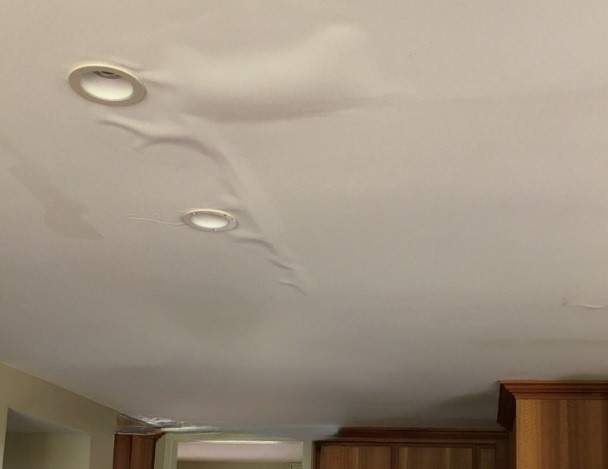
Common ceiling deterioration warning indicators include:
Water damage to hardwood floorboards
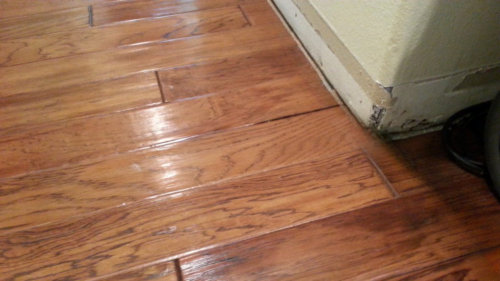
Water can quickly and readily harm hardwood flooring. Due to the ease with which water is absorbed through the pores of the wood, standing water on hardwood floors has the potential to irreversibly damage the wood.
When flooding occurs, it's crucial to remove the water as soon as possible and make sure the area is dried up as soon as you can. A burst pipe, a faulty tap, or a leaking roof are all sources of flood water.
It is possible to evaluate water damage to hardwood floors visually. Verify for:
Hardwood floor water damage develops gradually over time. Damaged hardwood floors are typically seen in the following locations:
Water damage to drywall
Leaking pipes, a leaking roof, or leaks close to windows and doors can all cause water damage to drywall. Depending on the degree of the water damage and where it has penetrated, it will be decided whether to repair or replace the drywall.
Although a moisture meter may be needed to check for moisture in the drywall and the walls, sometimes a visual inspection can rapidly identify drywall damage. Where plumbing is located in the ceilings below bathrooms drywall water damage is most frequently discovered.
Some commons signs of drywall water damage may be:

Water damage underneath and around enclosed shower
The enclosed shower is most likely the wettest area in the home, making it most vulnerable to moisture problems. Even though the majority of us are aware of this, faulty shower waterproofing is a prevalent issue and is listed as one of the top three construction flaws. Here are a few typical waterproofing errors and how to spot them early on to help you stop the tide.
Most enclosed shower waterproofing faults are caused by disregarding Australian Standards. They consist of: